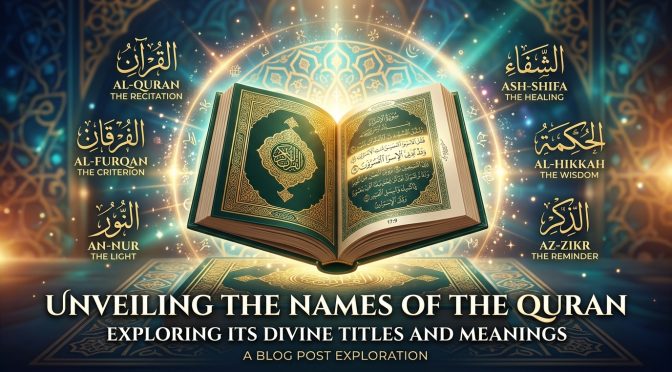
The Holy Quran stands as the central religious text of Islam, a divine revelation believed by Muslims to be the word of God (Allah) revealed to Prophet Muhammad (peace be upon him) over 23 years. More than just a book, it is considered a living miracle, a source of guidance, wisdom, and light for humanity until the end of time.
One of the profound aspects that highlights its multifaceted nature and divine origin is the sheer number of names attributed to it within its own verses. Each of these names of the Quran is not merely a label but a profound descriptor, unveiling a unique facet of its character, purpose, and unparalleled significance.
This comprehensive exploration delves into the myriad names of the Quran, unraveling their rich meanings and the profound insights they offer into the nature of this sacred scripture. By understanding these divine titles, believers can deepen their appreciation and connection to Allah’s ultimate message.
The Significance of Multiple Names for the Quran
It might seem unusual for a single book to possess so many distinct titles. However, for a text as profound and comprehensive as the Quran, these multiple names of the Quran are not redundant. Instead, they serve to emphasize its inexhaustible depths and the various ways it impacts human life and understanding. Just as a single diamond can reflect light in countless beautiful ways, the Quran, through its various names, reveals different aspects of its divine essence and function.
These names are not chosen arbitrarily; they are divinely ordained, each reflecting a specific attribute, quality, or role that the Quran plays. They highlight its power, clarity, guidance, healing, and truth, confirming its status as the ultimate word from the Creator to His creation. Exploring these various names of the Quran allows us to grasp its unparalleled majesty and the comprehensive scope of its divine message.
Prominent Names of the Quran and Their Profound Meanings
The Quran refers to itself by numerous names and epithets, each offering a unique lens through which to understand its divine character. Let’s explore some of the most prominent names of the Quran:
1. Al-Quran (The Recitation)
This is arguably the most common and widely recognized of all the names of the Quran. The word “Quran” itself is derived from the Arabic root “Qara’a,” meaning “to read” or “to recite.” It beautifully encapsulates the primary mode of its reception and dissemination – through oral recitation. For Muslims, the Quran is meant to be recited aloud, its melodic sounds and powerful verses resonating deeply, committing its words to memory and heart. This name emphasizes its living, audible nature, meant to be heard and pondered.
2. Al-Kitab (The Book)
Frequently appearing alongside “Al-Quran,” “Al-Kitab” signifies “The Book” or “The Scripture.” This name highlights its compiled, written form and its status as a complete, preserved scripture. While “Al-Quran” emphasizes its oral tradition, “Al-Kitab” stresses its comprehensive nature as a divinely revealed text, a testament to its preservation through both memorization and meticulous transcription. It is the definitive record of God’s final message, complete and unalterable, setting it apart from other books.
3. Al-Furqan (The Criterion / The Distinguisher)
From the Arabic root “faraqa,” meaning “to separate” or “to distinguish,” Al-Furqan means “The Criterion” or “The Distinguisher.” This powerful name of the Quran highlights its unique ability to differentiate between truth and falsehood, right and wrong, guidance and misguidance. It provides clear standards and principles by which to judge all matters of belief and conduct, serving as an ultimate benchmark for humanity. It empowers individuals to discern divine truth from human conjecture.
4. Al-Dhikr (The Remembrance / The Admonition)
Derived from “dhakara,” meaning “to remember” or “to mention,” Al-Dhikr translates to “The Remembrance,” “The Reminder,” or “The Admonition.” This name underscores the Quran’s role in reminding humanity of its covenant with God, its ultimate purpose, and its eventual return to Him. It serves as a constant admonition against heedlessness, urging people to reflect on God’s signs, remember His commands, and live a life conscious of His presence. It is a remembrance for those who have forgotten their spiritual origin.
5. Al-Tanzil (The Revelation / That Which Is Sent Down)
“Al-Tanzil” literally means “The Revelation” or “That which is sent down.” This name unequivocally asserts the divine origin of the Quran. It emphasizes that this book is not a product of human intellect or imagination but a direct descent of words from the Almighty Creator. It underscores the miraculous nature of its transmission from the heavens to the earth, through the Angel Gabriel, to the heart of Prophet Muhammad (PBUH), establishing its unquestionable authority and sacredness.
6. Al-Nur (The Light)
Meaning “The Light,” Al-Nur beautifully describes the Quran’s function as a beacon that illuminates the path for humanity. In a world often darkened by ignorance, doubt, and moral confusion, the Quran shines as a guiding light, dispelling darkness and leading people towards righteousness, knowledge, and truth. It enlightens hearts and minds, providing clarity on complex issues and illuminating the path to salvation and spiritual well-being.
7. Al-Huda (The Guidance)
As “The Guidance,” Al-Huda encapsulates the Quran’s primary purpose. It provides a comprehensive roadmap for all aspects of life – spiritual, moral, social, and legal. It guides individuals towards piety, justice, and success in both this world and the hereafter. This name emphasizes its practical utility, offering clear directions and principles for navigating the complexities of human existence and achieving ultimate fulfillment.
8. Al-Shifa (The Healing)
“Al-Shifa” translates to “The Healing” or “The Cure.” This name highlights the Quran’s profound ability to heal spiritual ailments, doubts, and moral diseases that afflict the human heart and soul. It offers solace, peace, and spiritual remedies for anxiety, despair, and confusion. Beyond spiritual healing, many believers also find comfort and healing from physical ailments through its recitation, recognizing its blessed nature.
9. Al-Hikmah (The Wisdom)
When the Quran is referred to as “Al-Hikmah,” “The Wisdom,” it points to the profound, deep, and perfect knowledge contained within its verses. It is not merely information but divine wisdom, distinguishing between truth and falsehood, providing optimal solutions to human problems, and revealing the underlying purposes of creation and existence. Its teachings are founded on ultimate truth and perfect understanding.
10. Al-Maw’izah (The Admonition / The Exhortation)
“Al-Maw’izah” means “The Admonition” or “The Exhortation.” This name highlights the Quran’s role in providing earnest counsel, warnings, and moral lessons to humanity. It gently yet firmly reminds people of their duties, the consequences of their actions, and encourages them towards piety and good deeds. It is a continuous source of moral instruction and spiritual awakening.
11. Al-Burhan (The Proof / The Evidence)
Meaning “The Proof” or “The Evidence,” Al-Burhan signifies that the Quran itself is an undeniable argument for the truth of Islam and the oneness of God. Its miraculous linguistic structure, profound prophecies, scientific allusions (understood in context), and consistent message serve as irrefutable evidence of its divine origin. It stands as a clear and conclusive proof for those who seek truth with an open heart.
12. Al-Haqq (The Truth)
“Al-Haqq” literally means “The Truth.” This name asserts that the Quran is the absolute and ultimate truth from God. It contains nothing but truth, free from error, contradiction, or falsehood. It reveals the true nature of God, the universe, and humanity’s purpose, distinguishing itself from all other narratives and philosophies which may contain elements of conjecture or human error. It is the word of the ultimately True One.
13. Al-Mubin (The Clear / The Manifest)
Translated as “The Clear” or “The Manifest,” Al-Mubin signifies that the Quran’s message is unambiguous, easy to understand for those who reflect, and clearly distinguishes between right and wrong. It removes doubts and makes the path of guidance evident. Its clarity is a mercy, allowing humanity to grasp its fundamental principles and apply them in their lives without confusion.
14. Al-Aziz (The Mighty / The Noble)
When referred to as “Al-Aziz,” meaning “The Mighty” or “The Noble,” the Quran’s inviolability and power are emphasized. It is a book that cannot be corrupted, altered, or defeated. Its message is powerful, its authority unquestionable, and its protection divinely guaranteed. This name underscores its exalted status and the invincibility of its truth.
15. Al-Karim (The Noble / The Generous)
“Al-Karim,” “The Noble” or “The Generous,” highlights the esteemed status of the Quran and the bounties it bestows upon those who engage with it. It is a noble revelation, full of blessings, wisdom, and rewards for its readers and practitioners. It generously offers guidance, peace, and salvation to humanity.
Deeper Insights into the Names of the Quran
The existence of so many profound names of the Quran is not a mere literary flourish; it is a testament to the comprehensive and perfect nature of Allah’s final revelation. Each name adds a layer of understanding, encouraging believers to interact with the Quran on multiple levels.
By reflecting on “Al-Furqan,” we are reminded of its crucial role in helping us navigate moral dilemmas. “Al-Nur” inspires us to seek its wisdom in times of confusion. “Al-Shifa” invites us to find solace and healing in its verses. Collectively, these names of the Quran paint a holistic picture of a divine scripture that is a guide, a reminder, a light, a healer, a proof, and an undeniable truth – all in one.
Understanding these names also deepens our appreciation for the linguistic brilliance of the Arabic language, through which the Quran was revealed. The precision and richness of Arabic allow for such nuanced and multifaceted descriptions, each word carrying profound significance. It reinforces the belief that the Quran is indeed a miraculous text, perfectly preserved and perfectly described by its Creator.
Conclusion
The journey through the various names of the Quran is a profound exploration into the heart of Islamic faith. Each title, whether it is Al-Quran, Al-Kitab, Al-Furqan, or Al-Nur, unlocks a deeper dimension of this divine scripture, revealing its multifaceted nature and its unparalleled importance for humanity. These names are not just labels; they are epithets that describe its origin, its purpose, its power, and its transformative potential.
By acknowledging and reflecting upon these diverse names of the Quran, believers can foster a richer, more profound relationship with Allah’s final message. They serve as a constant reminder that the Quran is far more than just a historical text; it is a living, breathing guide, a source of light, healing, and wisdom that continues to illuminate the lives of millions across the globe, leading them towards truth, justice, and eternal success. May our engagement with the Quran always be one of deep respect, reflection, and sincere application of its timeless teachings.
Frequently Asked Questions (FAQ)
Q1: Why does the Quran have so many names?
The Quran has numerous names to highlight its multifaceted nature, comprehensive scope, and diverse functions. Each name describes a unique attribute or role of the divine scripture, such as its ability to guide, heal, distinguish truth from falsehood, or serve as a light. These multiple names of the Quran emphasize its profound significance and perfect design.
Q2: Are all these names mentioned within the Quran itself?
Yes, many of the prominent names of the Quran, such as Al-Quran, Al-Kitab, Al-Furqan, Al-Dhikr, Al-Nur, and Al-Huda, are explicitly mentioned within its own verses. These self-referential titles further underscore their divine origin and authority, making them an integral part of the scripture’s identity.
Q3: What is the most common name for the Quran?
The most common and widely recognized name for the holy book is “Al-Quran” itself, meaning “The Recitation.” This name emphasizes its oral tradition and the importance of its recitation in Islamic practice.
Q4: Do these different names imply different versions or parts of the Quran?
No, the multiple names of the Quran do not imply different versions or parts. They all refer to the single, unified, and divinely preserved text that Muslims believe to be the complete and final revelation from Allah. The different names merely highlight various aspects and characteristics of this one sacred book.
Q5: How does understanding these names enhance a Muslim’s relationship with the Quran?
Understanding the various names of the Quran deepens a Muslim’s appreciation for its comprehensive guidance and divine wisdom. It allows for a more nuanced and holistic engagement with the text, recognizing its role as a light, a healer, a criterion, and an admonition. This deeper understanding can inspire greater reverence, reflection, and commitment to living by its teachings.